
Tanning products & skincare for a sunbed studio tan - Neyland, Pembrokeshire
skincare
before, during & after tanning
Tanning begins, and ends, with the skin!
Before your very first session, our Salon manager will take you through registration, during which she will assess your skin type (see below ). . . and explain the importance of hydration.
Whether you’re aiming for a natural glow or a deep, dark tan, hydrated skin absorbs UV rays more evenly, which translates into a smoother, more uniform tan.
[ BONUS: Skin types, explained ]The six main Skin Types, with a common description for each in (brackets).
Type 1 (very fair): People with this skin type, usually coupled with blonde, ginger or sandy hair, blue or grey eyes and lots of freckles, have little natural protection against UV and are at a high risk of burning and peeling. Those with skin type 1 are generally advised to avoid tanning altogether, either on a sunbed or in natural sunlight.
Type 2 (fair): Probably with freckles, blonde to brown hair and green or grey eyes. Type 2 skin is still at high risk of burning, so great care and time should be taken when tanning.
Type 3 (honey): Those with fair to light brown skin, with fewer freckles; usually with dark blond or brown hair and grey or green eyes, are considered to have a medium risk of burning. . . but are capable of building up a moderate tan.
Type 4 (olive): Sometimes referred to as a 'Mediterranean' complexion, people with Type 4 skin have a naturally light brown colouration, with dark brown hair and eyes. This skin type is rapid to tan and rarely results in burning.
Type 5 (brown): This skin type is typified by a deep, rich brown colour, usually coupled with dark hair and eyes. Because this skin type has its own natural protection, burning is rare; tanning is rapid, deep and long lasting.
Type 6 (black): Very dark skin, black hair and dark eyes. Despite being the most UV tolerant skin type that never burns in natural sunlight, care must still be taken when tanning areas of the body not usually exposed to UV.
CLICK TO CLOSE THIS CONTENT

protecting
scars & stretch marks
Because scars, stretch marks and tattoos all react differently to UV, these factors will be taken into account when calculating your safe exposure times during the initial assessment.
In the case of tattoos, UV can degrade ink pigments, causing colors to fade. . . and designs to blur.
Stretch marks are a type of scarring that occurs when the skin's collagen and elastin breaks down. In common with injury scars, they can't produce melanin (pigment ) like normal skin, so they remain lighter.
[ BONUS: Tanning with scars or tattoos ]When tanning injured or previously scarred skin, three issues should be taken into consideration.
Hyperpigmentation (Darkening): Scar tissue cannot produce protective cells like undamaged skin, which makes it susceptible to damage and darkening (hyperpigmentation ) when exposed to Ultraviolet, a change that may be permanent.
Delayed Healing: UV radiation can delay the healing process of fresh wounds, potentially leading to more noticeable scarring.
Altered Texture: Tanning, both natural and 'artificial', can affect the elasticity of the skin and break down collagen, leading to changes that can make scars appear coarser or more pronounced.
For healed tattoos it is advisable to apply an SPF 30 or higher, specifically to the tattooed areas, before tanning to block UV rays and prevent ink fade.
You may also use a waterproof cloth or medical tape to cover the tattoo during sessions, though this limits tanning.
CLICK TO CLOSE THIS CONTENT
skin products
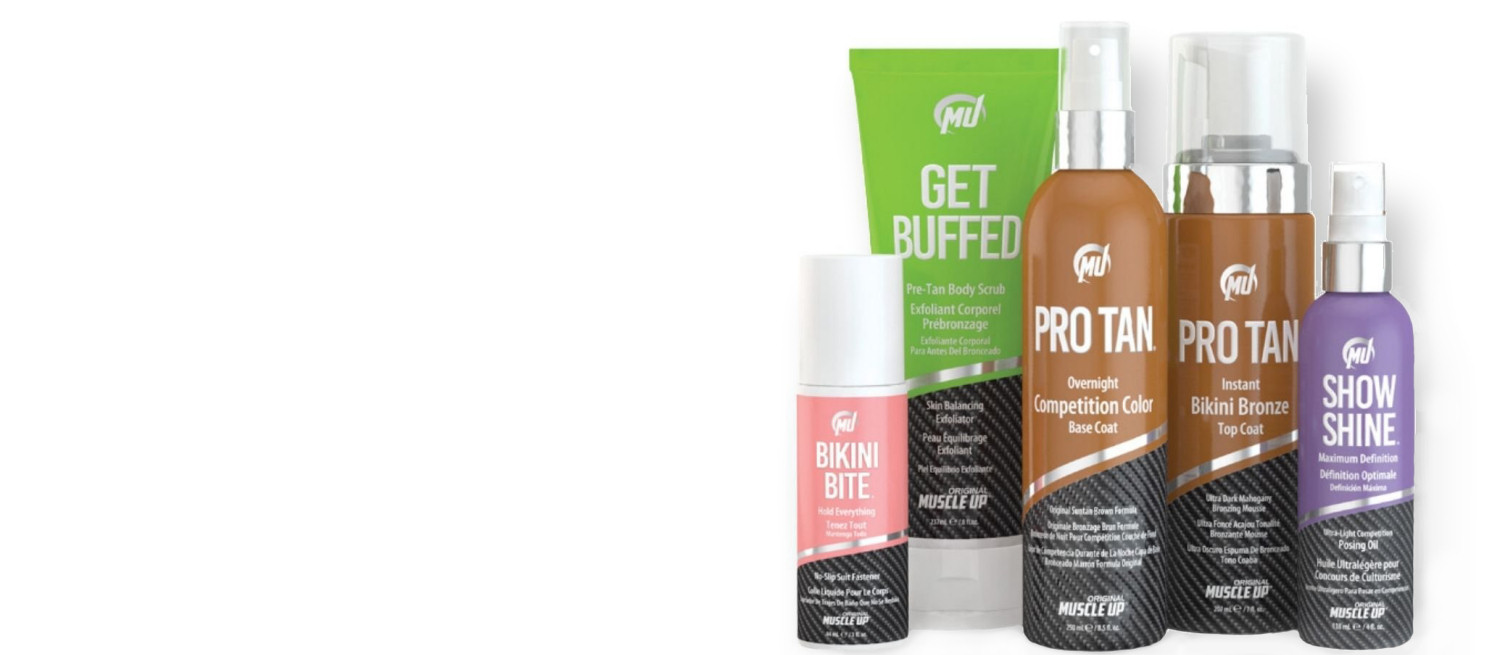
Tanning creams are products which, when applied to your skin before or after using a sunbed, can help to achieve your desired tan faster. . . and keep it for longer! These include Accelerators, Bronzers and Tingle Creams, better described in the BONUS content below.
[ BONUS: Popular tanning products, explained ]Accelerators: Melanin is the pigment that gives your skin its colour and protects it from Ultra Violet. 'Accelerators' are creams that speed up your body's natural melanin production, helping you to develop a base tan faster and more evenly.
Although accelerators often include moisturizers to hydrate your skin while tanning, they don't usually contain colourants, so will not stain your skin or clothes.
Bronzers: Bronzers, as the name suggests, add an instant boost of colour to your skin. They come in different levels of intensity, from mild to extreme, and fall into three 'types'.
'DHA' bronzers contain an additive (DiHydroxyAcetone ) that reacts with the dead cells on your skin's surface to create a brown tint. Although DHA bronzers take several hours to fully develop, the colour can last several days before fading.
NATURAL bronzers use ingredients like caramel, walnut shell extract or henna to give your skin a chemical-free glow. The cream works immediately, but washes off readily with soap and water.
COSMETIC bronzers use pigments like mica or iron oxide for an instant result and also wash off with water. . . but can stain clothes or towels.
Tingle Creams: These preparations contain ingredients like Methyl Nicotinate, Benzyl Nicotinate or Capsicum (chilli extract ) to stimulate blood flow and oxygen supply to the skin, promoting melanin production and enhancing your tan.
Be aware, however, that Tingle Creams can cause slight redness, swelling or itching on 'sensitive' areas.
CLICK TO CLOSE THIS CONTENT
Ask our Salon Manager to recommend products that will work best with your skin type, including damaged areas, and your planned tanning regime.
. . .call 07539 737 970